


Ford Kuga Common Problems: The 1.6 EcoBoost Fire Saga, PowerShift Failures & Major Recalls (SA Owner's Guide)

Quick Info
Estimated Repair Cost
Estimated Repair Time
Key Takeaways
| Problem | Severity | Typical SA Cost (ZAR) |
|---|---|---|
| 1.6 EcoBoost engine fires — the SA recall scandal | Safety Critical | R75,000 – R350,000 |
| PowerShift 6DCT450 wet-clutch transmission failure | Major | R35,000 – R95,000 |
| 2.0 TDCi turbocharger failure + DPF/EGR clogging | Major | R8,000 – R45,000 |
| 1.5 EcoBoost wet timing belt + water pump failure | Major | R18,000 – R50,000 |
| Other faults to know about (battery drain) | Moderate to Critical | R3,500 – R45,000 |
The Ford Kuga is the most controversial used SUV on the South African market — and that is almost entirely because of the 1.6 EcoBoost engine-fire saga. Ford SA recalled 4,556 Mk2 Kugas in 2017 after 56 confirmed fires, the death of Reshall Jimmy near Wilderness in December 2015, 160 National Consumer Commission complaints and an eventual R35 million Consumer Protection Act settlement. Any 2013–2014 1.6 EcoBoost Kuga that has not had both recall phases completed is a fire risk — always VIN-check before buying. This guide covers the four core fault clusters every SA Kuga owner needs to understand, with indicative repair costs and what to look for. For a full view of available components, browse the Ford Kuga parts catalogue.
The SA Kuga Fire Recall — Check Your VIN Before You Do Anything Else
If you own, or are about to buy, a Ford Kuga, the single most important action you can take is a VIN-level recall check at a Ford SA dealer.
1.6 EcoBoost engine fires (2017): 4,556 Kuga 1.6 EcoBoost units built at Valencia, Spain between December 2012 and February 2014 were recalled across two phases. Phase 1 (January 2017) fitted a coolant level sensor and updated cooling system; Phase 2 added upgraded coolant hose routing. Ford SA announced on 3 March 2017 that completion of Phase 1 alone sat at only 63% across the affected fleet — meaning hundreds of fire-prone Kugas remained unfixed years later.[1]
What to do: Present the VIN at any Ford SA dealership and ask them to run a recall check on it. The work is free, the dealer keeps the records, and you walk away with documented proof for resale.
1. 1.6 EcoBoost Engine Fires — The South African Kuga Recall Scandal
This is the headline issue. The 1.6 EcoBoost engine-fire saga is one of the most serious automotive safety stories in South African history. It cost a life. It cost Ford R335 million across three recalls plus a R35 million NCC fine. And it remains the single biggest reason to verify the VIN on any 2013–2014 Kuga before purchase.
Symptoms owners report: A coolant warning light or a sudden drop in coolant level. The temperature gauge spikes erratically and then drops again — the symptom of the head temperature sender being uncovered as coolant escapes. A smell of burning oil from the engine bay. Smoke from under the bonnet. In the worst documented cases, a catastrophic engine-bay fire that destroys the vehicle in minutes — sometimes from a standing start in the driveway.[2]

Root causes: The 1.6 EcoBoost JQMA/JTMA engine — built at Ford’s Valencia, Spain plant between December 2012 and February 2014 — has a documented coolant circulation deficiency. Localised overheating cracks the aluminium cylinder head under thermal stress. Engine oil then leaks out of the crack, contacts the hot turbocharger or exhaust manifold, and ignites. The coolant expansion-tank cap design and the original hose routing on Valencia-built engines were both implicated by Ford’s own engineering disclosures during the recall.[3] Owners who topped up coolant late, or ignored early warnings, progressed from a manageable cooling problem to full head failure or fire.
The Reshall Jimmy story: Reshall Jimmy was travelling from Johannesburg to George when his 2014 Ford Kuga 1.6 EcoBoost caught fire outside the Fairy Knowe Hotel in Wilderness on 4 December 2015. He died in the blaze. His family campaigned for years to have the death linked formally to the EcoBoost fire defect, eventually reaching the Western Cape High Court inquest in 2019 — almost four years after the fire. The Jimmy case is the reason this recall went public in South Africa at all: until media coverage of the death gathered momentum in late 2016, Ford SA had been managing complaints quietly.[4][5]
The numbers Ford SA finally had to publish: 4,556 Mk2 Kuga 1.6 EcoBoost units recalled in two phases starting January 2017. 56 confirmed fires. 160 NCC consumer complaints. R335 million spent by Ford on three recall campaigns. R35 million in fines settled with the National Consumer Commission in 2019 after the NCC ruled Ford had contravened the Consumer Protection Act. R50,000 in compensation offered per fire-affected vehicle.[6][7]
The fix: Phase 1 of the recall fitted a coolant level sensor and updated software. Phase 2 fitted upgraded coolant hose routing. Cars where both phases were completed have the immediate fire risk contained. The catch is that Ford SA confirmed on 3 March 2017 that only 63% of the affected fleet had completed Phase 1 — meaning a meaningful percentage of fire-prone Kugas are still on SA roads in 2026. Any car that ran low on coolant before the recall may also carry latent head damage that only shows up months or years later.[1]
SA cost range: R0 if both recall phases were properly completed and the car has had no thermal events since. R18,000 – R35,000 for a used cylinder head, skim, machining and fresh head bolts + gasket + water pump + full coolant flush. R80,000 – R180,000 for a full long-block replacement (used 1.6 EcoBoost engine from a Ford specialist). On a fire-damaged car, the entire vehicle is a write-off — the only economical path is selling the burned shell for salvage value.
DIY Difficulty: Garage Only | Time: 15–30 hours for head replacement; full engine swap is a 2–3 day workshop job
Critical Warning
Never start a 2013–2014 Kuga 1.6 EcoBoost without first confirming both recall phases on its VIN. If a Ford SA dealer’s VIN check shows either phase outstanding, do not drive the car home — have it recovered to a Ford dealer for the work. The fire risk is documented, fatal, and unactioned on roughly one in three affected cars.

Used Ford Kuga 1.6 EcoBoost Engine
The biggest single repair on any SA Kuga — a used 1.6 EcoBoost long-block for fire-damaged or cracked-head cars. We source used units to order. A used replacement saves R 60,000 – R 120,000 versus a new OEM engine at SA dealer pricing.
2. PowerShift 6DCT450 Wet-Clutch Transmission Failure
The Kuga’s automatic gearbox is the second-most-discussed fault on every Kuga owner forum worldwide. SA buyers should note one critical distinction up front: the Kuga uses the 6DCT450 wet-clutch PowerShift (a Getrag unit), not the dry-clutch DPS6 fitted to the Fiesta, Figo and Focus. For the dry-clutch mechanics and class-action history covered in detail elsewhere, see our Figo PowerShift breakdown. The Kuga’s failure mode is different — and more expensive.
Symptoms owners report: Harsh or jerky gear changes, particularly from cold or in stop-start traffic. A mechatronic fault that triggers the wrench light, drops the car into limp-home mode, and refuses to shift out of one gear. A whining or grinding noise from the bellhousing under load. Complete loss of drive — the engine runs but the car coasts in neutral. Plastic debris in the transmission oil pan when the gearbox oil is changed for the first time.[8]

Root causes: The 6DCT450 has a fundamental design weakness in its plastic clutch-spring damper guides, which fatigue and fragment with age. The resulting debris contaminates the mechatronic valve body, blocking solenoids and destroying the unit’s ability to shift cleanly. Pre-late-2016 Continental-built mechatronic units also suffer from dry solder joints in the TCU that cause erratic shift logic. Ford originally listed gearbox oil changes as “optional” on the Kuga’s service schedule — most SA owners never changed the oil, so debris built up unchecked until clutch pack wear at around 100,000 km finished the unit off. Using anything other than Ford XT-12-QLVC (Mercon LV) transmission fluid accelerates the failure.[9]
What about the class actions? The Australian Competition and Consumer Commission won a AUD 10 million federal-court order against Ford Australia in 2018 for “unconscionable conduct” in handling PowerShift complaints. The US Vargas v. Ford Motor Co. class action delivered a similar outcome. The catch for Kuga owners: both legal actions covered Fiesta, Focus and EcoSport with the dry-clutch DPS6 — not the Kuga’s wet-clutch 6DCT450. Kuga PowerShift owners worldwide have therefore been left without a formal recall remedy, even though the same Ford brand-name covers both gearbox families.[10]
The fix: Once symptoms appear, the only durable repair is a mechatronic-plus-clutch-pack rebuild done by a specialist who handles 6DCT450 units day in and day out. Most Ford dealers simply swap the gearbox rather than rebuild it — that doubles the bill. Going forward, run a gearbox oil and filter change every 40,000–60,000 km regardless of what the original service book says, and keep the receipts: documented service history is the single biggest lever you have on what an eventual repair costs you.
SA cost range: R 18,000 – R 30,000 for a mechatronic-only repair (debris cleaned, valve body rebuilt, solenoids replaced, TCU reflashed). R 25,000 – R 45,000 for a full clutch pack and plastic damper inspection. R 35,000 – R 65,000 for a used replacement gearbox plus fitting. R 25,000+ for a brand-new Ford clutch assembly alone at SA dealer pricing.
DIY Difficulty: Garage Only — specialist transmission workshop required | Time: 8–20 hours

Ford Kuga PowerShift 6DCT450 Replacement
Used and reconditioned 6DCT450 wet-clutch PowerShift units — the only economical option when the original gearbox is past mechatronic rebuild.
3. 2.0 TDCi Turbocharger Failure and DPF/EGR Clogging
The 2.0 TDCi Duratorq is the diesel option fitted to SA Mk1 and Mk2 Kugas. It is the engine of choice for owners who tow caravans or do long highway runs — but it punishes the school-run, short-trip use that defines daily life for most SA suburban families.
Symptoms owners report: A sudden loss of power, often with a P2263 (turbocharger underboost) or P246C (DPF) fault code logged. Limp-home mode after a short period of normal driving. Black smoke from the exhaust under acceleration. A whistling or screeching noise from the engine bay (failing turbo bearings). An engine warning light combined with the “Engine Malfunction Service Now” message on the dash. Rough idle, hard cold starts and intermittent stalling.[11]
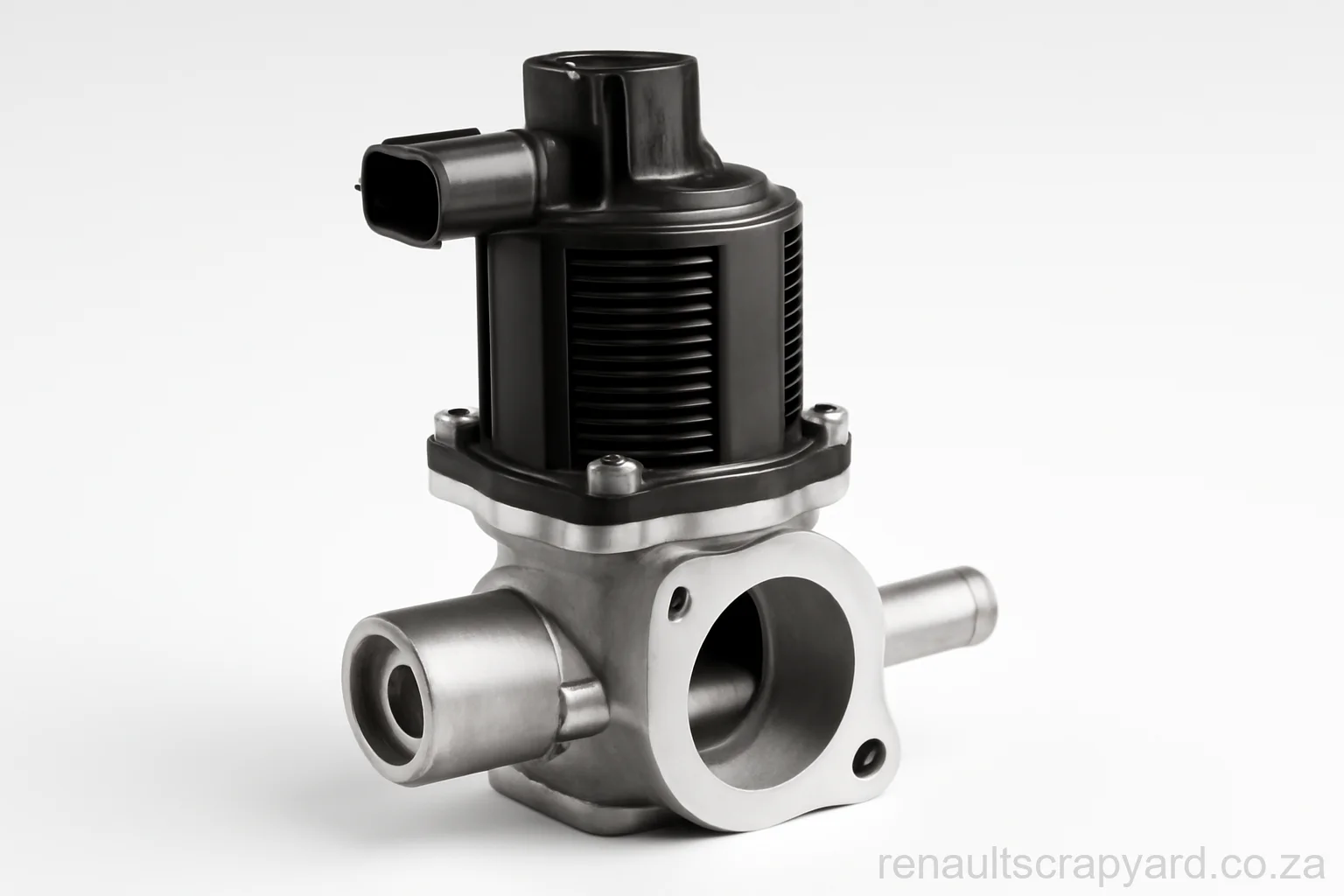
Root causes: Four overlapping failure modes feed each other on the 2.0 TDCi. Turbocharger bearing wear builds up after years of short trips where the oil never reaches proper operating temperature. The DPF (Diesel Particulate Filter) clogs because the car never gets a high-load motorway run long enough to regenerate — a classic city-driving fault on SA suburban Kugas. EGR valves carbon up and restrict flow. The differential pressure sensor fails and logs false DPF codes. Finally, fuel injectors wear at around 130,000 km, causing incomplete combustion and accelerated DPF loading.[12]
The fix: Diagnose before you spend. A clogged DPF and a failed turbo present near-identically but cost very different money to rectify. Have an independent workshop pull live data — boost pressure under load, DPF differential pressure, soot loading and EGR position — before authorising any parts. If the turbo is genuinely gone, a reconditioned unit from a specialist is the SA value buy; new OEM turbos cost roughly double for marginal real-world benefit. Always replace the turbo oil feed pipe and clean the oil pickup screen at the same time — fit a new turbo into dirty oil galleries and it will fail too. Going forward, give a diesel Kuga a weekly 30-minute highway run above 80 km/h so the DPF can complete its regeneration cycle.
SA cost range: R 4,000 – R 9,000 for a DPF clean and a new differential pressure sensor. R 6,000 – R 12,000 for EGR valve replacement. R 14,000 – R 28,000 for a reconditioned turbocharger and fitting. R 30,000 – R 55,000 for a new OEM turbo and fitting.
DIY Difficulty: Advanced — diagnostic equipment required | Time: 6–14 hours

Ford Kuga 2.0 TDCi Turbocharger
Reconditioned and used 2.0 TDCi turbochargers for Mk1 (UFMA) and Mk2 (T7MA) Kugas. Browse our engine accessory stock.
4. 1.5 EcoBoost Wet Timing Belt and Water Pump Failure
This is the fault that turns an R20,000 service item into a R70,000 engine rebuild if you ignore it. The 1.5 EcoBoost — fitted to early Mk2 Kugas — uses a wet timing belt that runs inside the engine bathed in oil, and the water pump sits on the same belt. When either lets go, the consequences are immediate.
Symptoms owners report: A sudden coolant leak with no visible puddle — the belt-driven water pump weeps internally into the oil sump. A milky or chocolate-milkshake residue on the dipstick where oil and coolant have emulsified. The engine stalls without warning and refuses to restart (belt has snapped). A ticking or rattling noise from the timing cover as belt fibres begin to shed. The low oil pressure warning light, often caused by shed belt debris blocking the oil pickup strainer.[13]
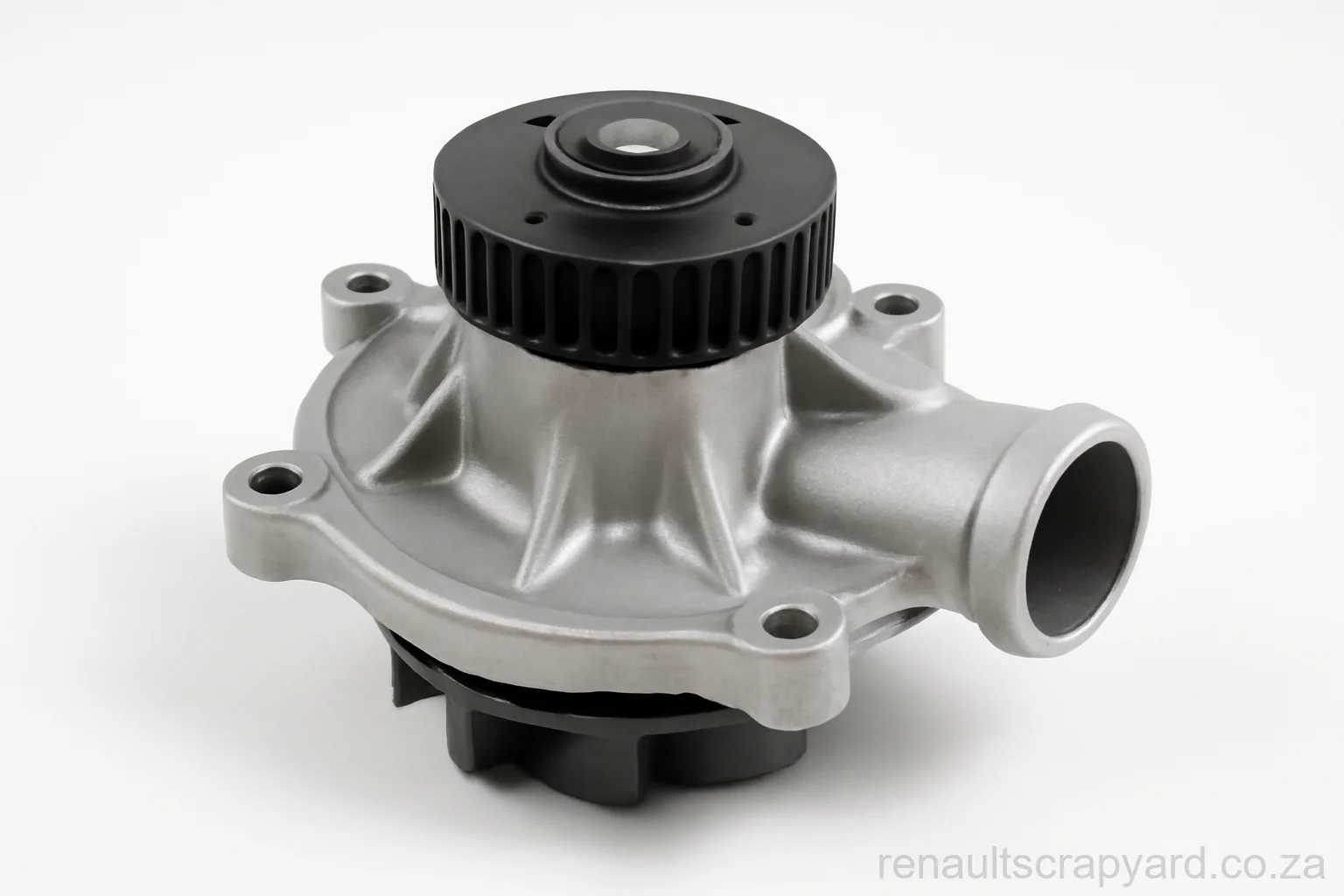
Root causes: The wet timing belt runs in engine oil and degrades faster than a conventional dry belt, especially when oil change intervals are stretched. The water pump seal — driven off the same belt — fails at around 70,000 to 80,000 miles (roughly 110,000 to 130,000 km), well short of the “lifetime” service claim Ford originally made for the design. Late or skipped oil changes accelerate fibre shedding, and shed fibres block the oil pickup. The wrong oil specification (the engine requires Ford-approved 5W-20) softens the belt material. Some early Mk2 1.5 EcoBoost Kugas also left the factory with a known-bad water pump batch.[14]
The fix: Replace the wet belt, water pump, tensioner and auxiliary belt as a kit every 100,000 km regardless of what the service book says. Run oil and filter changes with Ford-spec 5W-20 every 10,000 km — not the 20,000 km Ford originally recommended. If you are buying a high-mileage 1.5 EcoBoost Kuga, treat the belt service as a known purchase cost and budget for it before the test drive. If the belt has already snapped or the oil pickup is contaminated, expect a full engine teardown to remove shed debris from the oil galleries — at which point a used engine swap is often cheaper than the rebuild.
SA cost range: R 18,000 – R 28,000 for a belt, water pump, tensioner and oil/filter service at an independent specialist. R 35,000 – R 70,000 if there is secondary damage from a snapped belt or contaminated oil pickup. R 80,000+ for a full engine rebuild after seizure.
DIY Difficulty: Advanced — timing precision required | Time: 6–10 hours
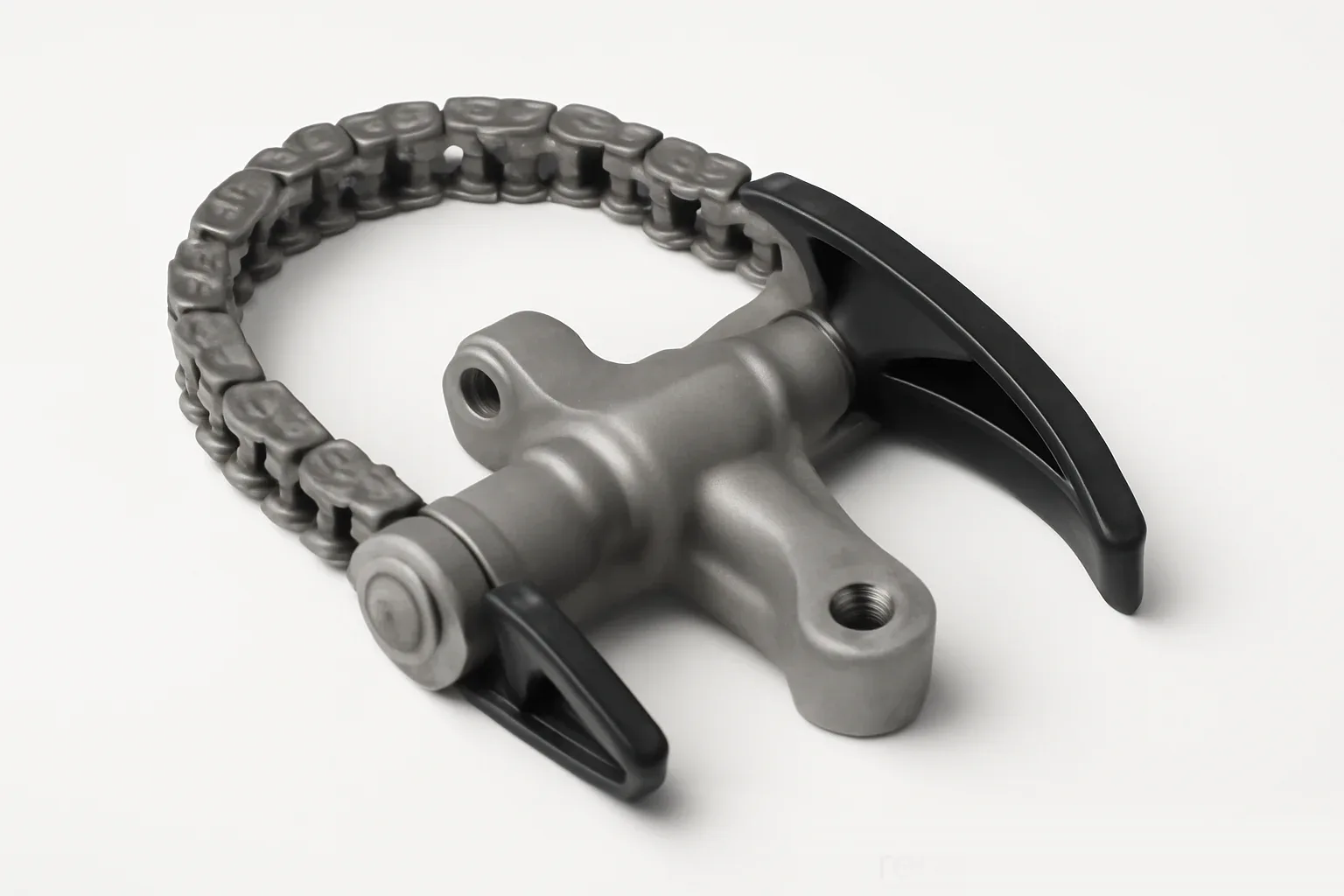
Kuga 1.5 EcoBoost Wet Belt Kit
Wet timing belt, water pump, tensioner and auxiliary belt as a matched set — the only correct way to service the 1.5 EcoBoost's timing system. Fits Mk2 Kugas built 2014–2019.
Other Faults To Know About
Beyond the four major fault clusters above, the Kuga has one more recurring issue that owners encounter often enough to warrant a heads-up. We have not given each its own deep-dive section because either the fix is straightforward, the SA market exposure is small, or the issue has already been fully documented elsewhere — but skipping them would leave the picture incomplete.
Parasitic battery drain through keyless door handles. On Mk2 and Mk3 Kugas, the keyless-entry door handles sometimes fail to go to sleep properly, drawing current 24/7 and flattening the AGM battery overnight. Symptoms are obvious — “System Off to Save Battery” warnings, the car refusing to start in the morning despite a recent drive, and a battery that tests fine in isolation but dies again within 48 hours. An auto-electrician with a current clamp can pull each fuse in turn to isolate the draw; on Mk2/Mk3 the door handles are the most common single culprit. Budget R 1,500 – R 3,500 for diagnosis, R 4,500 – R 9,500 for door-handle replacement, and R 3,500 – R 7,500 for a new genuine AGM battery (do not downsize to a flooded unit — the Kuga needs the H6 or H7 AGM specifically).
Need Ford Kuga Parts? Get a Quote Today.
We stock used and reconditioned parts for the Mk1, Mk2 and Mk3 Kuga — 1.6 EcoBoost engines, 6DCT450 PowerShift gearboxes, 2.0 TDCi turbos, 1.5 EcoBoost wet-belt kits, clutch sets and more — with nationwide delivery.
Frequently Asked Questions
What are the most common Ford Kuga problems in South Africa?
The four most serious Ford Kuga faults in SA are: (1) 1.6 EcoBoost engine fires affecting 4,556 Mk2 Kugas built at Valencia between December 2012 and February 2014 — subject to a 2017 Ford SA recall and a R35 million NCC settlement; (2) PowerShift 6DCT450 wet-clutch transmission failure on most automatic variants between 2013 and 2019; (3) 2.0 TDCi turbocharger and DPF clogging on diesel models, especially on short-trip city use; and (4) 1.5 EcoBoost wet timing belt and water pump failure on early Mk2 petrol cars. Beyond those, parasitic battery drain through keyless door handles affects a smaller sub-population.
Which year are Ford Kuga models burning?
The fire-affected Kugas are 2013 and 2014 1.6 EcoBoost models built at Ford’s Valencia, Spain plant between December 2012 and February 2014. Ford SA recalled 4,556 units across two phases starting January 2017 after 56 confirmed fires and the death of Reshall Jimmy at Wilderness in December 2015. The mechanism is a coolant circulation defect — the head cracks under thermal stress, oil leaks out, contacts the hot turbo and ignites. Phase 1 of the recall completed on only 63% of affected cars per Ford SA’s own March 2017 data, meaning unactioned fire-prone Kugas remain on SA roads.
Is the Ford Kuga a good reliable car?
The Ford Kuga is one of the lower-scoring SUVs in independent reliability surveys. The 1.6 EcoBoost engine, PowerShift 6DCT450 gearbox, 2.0 TDCi turbo and 1.5 EcoBoost wet belt have all been subject to either formal recalls or documented widespread failure. Mid-2010s diesel Kugas placed 13th out of 15 in WhatCar’s reliability survey at 83.8%, with a 44% fault rate. The Kuga is not a bad-driving car, but it carries significantly higher repair risk than a Toyota RAV4 or Mazda CX-5 of the same era — buyers must factor R 25,000 – R 80,000 of likely repairs into the first three years of ownership depending on engine choice.
What is the recall on the Ford 1.6 EcoBoost?
In South Africa, Ford recalled 4,556 Kuga 1.6 EcoBoost units across two phases starting 16 January 2017. Phase 1 fitted a coolant level sensor and updated software. Phase 2 fitted upgraded coolant hose routing. The recall followed 56 confirmed engine-bay fires and the death of Reshall Jimmy at Wilderness in December 2015. Ford SA agreed to pay a R35 million settlement to the National Consumer Commission in December 2019 for contravening the Consumer Protection Act in its handling of the matter. The mechanism — engine overheating from a lack of coolant circulation, causing the cylinder head to crack and oil to leak onto hot engine surfaces — is the same one Ford identified globally on the 1.6 EcoBoost. Owners check VIN status at any Ford SA dealer free of charge.
Is the Ford Kuga PowerShift gearbox reliable?
The Kuga uses the 6DCT450 wet-clutch PowerShift — not the dry-clutch DPS6 that drew Ford’s Australian AUD 10 million federal-court order in 2018. The wet-clutch unit has its own documented failure pattern centred on plastic clutch-spring damper guides fragmenting, mechatronic solenoids blocking with debris, and clutch packs wearing out around 100,000 km. SA owners face a R 35,000 – R 95,000 repair bill on a car typically worth twice that on the second-hand market. The mitigation is a gearbox oil and filter change every 40,000 to 60,000 km — Ford originally listed this as optional, which is why so many SA units have failed prematurely. For the dry-clutch DPS6 mechanics on Ford’s smaller cars, see our Ford Figo problems guide.
What is the most common problem with Ford Kuga?
The single most-discussed Kuga problem is the 1.6 EcoBoost engine-fire saga (2013–2014 SA Mk2 models). The most-discussed mechanical fault that is not a formal recall is the PowerShift 6DCT450 wet-clutch transmission failure (2013–2019 automatic variants). For Mk1 owners, the 2.0 TDCi turbo and DPF combination drives the most common fault report. For early Mk2 petrol owners, it is the 1.5 EcoBoost wet timing belt and water pump. The headline finding is that the Kuga has multiple high-cost failure modes across different powertrains — buyers cannot simply “avoid the bad engine” because every engine option has a documented weakness.
Can a PowerShift transmission be fixed?
Yes — a 6DCT450 PowerShift can be rebuilt rather than replaced. Common repairs include mechatronic valve body cleaning and solenoid replacement, clutch pack renewal, TCU calibration updates, and plastic damper guide replacement. Costs at SA independent transmission specialists range from R 18,000 – R 30,000 for mechatronic-only work to R 25,000 – R 45,000 for a full clutch pack rebuild. The catch is finding a specialist — most Ford dealers simply swap the gearbox for a used unit at R 35,000 – R 65,000 fitted, which doubles the bill. Going forward, gearbox oil and filter changes every 40,000 to 60,000 km dramatically extend the life of a rebuilt PowerShift unit.
How do I check if my Ford Kuga has been recalled?
Take the vehicle’s 17-digit VIN to any Ford SA dealership and ask the service department to run a recall check against all current and historical campaigns. The check is free, takes a few minutes, and the dealer keeps a record. On a 2013–2014 1.6 EcoBoost, confirm that both phases of the 2017 fire recall were completed. If any campaign is outstanding, Ford remedies it free of charge — even years after the original recall date.
Should I buy a used Ford Kuga 1.6 EcoBoost in South Africa?
Only with documented proof that both phases of the 2017 SA recall were completed, and only after a compression test and coolant pressure test by an independent workshop confirms no latent head damage from any prior overheating event. Even with both recall phases done, cars that ran low on coolant before the recall sometimes carry head cracks that surface months or years later. Treat the test drive and inspection bill as a non-negotiable purchase cost. If the seller cannot produce written proof of Phase 1 and Phase 2 completion, walk away — there are plenty of Kugas on the SA market, and the fire risk on an unactioned unit is documented and fatal.
How much does a Ford Kuga PowerShift gearbox repair cost in South Africa?
The PowerShift 6DCT450 repair range for SA Kuga owners is R 18,000 – R 95,000 depending on the extent of the damage. A mechatronic valve body rebuild with new solenoids and TCU reflash runs R 18,000 – R 30,000 at a specialist. A full clutch pack rebuild with plastic damper guide replacement runs R 25,000 – R 45,000. A used replacement gearbox plus fitting runs R 35,000 – R 65,000 — usually the route Ford SA dealers take. A brand-new OEM Ford clutch assembly alone is over R 25,000 at dealer pricing. The fault is not covered by any class action affecting SA Kugas because the Australian and US class actions both covered the dry-clutch DPS6, not the Kuga’s wet-clutch 6DCT450.
Is the Ford Kuga 2.0 TDCi engine reliable?
The 2.0 TDCi Duratorq is the most reliable Kuga engine when used on long highway runs and serviced on time — and the least reliable when used for short city trips with stretched service intervals. The failure pattern is consistent: short trips never get the DPF hot enough to regenerate, the EGR valve carbons up, the turbo bearings wear from cold-oil starts, and the differential pressure sensor fails. By 130,000 km, injector wear adds incomplete combustion to the mix. The mitigation is a weekly 30-minute highway run above 80 km/h, 10,000 km oil changes with the correct Ford spec, and immediate workshop diagnosis if a fault code appears — not “keep driving and see if it clears”.
Conclusion
The Ford Kuga is a difficult car to recommend without a list of conditions attached. The 1.6 EcoBoost fire saga remains the largest single safety event in modern SA automotive history, and unactioned cars are still on the road in 2026. The PowerShift 6DCT450 is a R 35,000 – R 95,000 repair waiting to happen on most automatic variants. The 2.0 TDCi punishes city use. The 1.5 EcoBoost wet belt is a R 70,000 surprise if it snaps. None of this means the Kuga is unusable — it means every prospective owner needs to know the failure profile, run a VIN check on the recalls, and budget for the maintenance Ford originally said was optional.
Get a free quote on any Kuga component above by calling 010 230 0168, WhatsApp 078 574 3998, or email partsoncall123@gmail.com — we source the right Kuga part, from 1.6 EcoBoost long-blocks to 6DCT450 PowerShift gearboxes.
Sources and References
- News24 Wheels — Ford SA’s huge recall: Here’s what Kuga owners should know (4,556 units, December 2012 to February 2014 build dates, 63% Phase 1 completion as of 3 March 2017): https://www.news24.com/Wheels/ford-sas-huge-recall-heres-what-kuga-owners-should-know-20170116
- Kuga Owners Club — 1.6L EcoBoost overheat issues thread: https://www.kugaownersclub.co.uk/threads/1-6l-ecoboost-overheat-issues.12271/
- CAR Magazine SA — Ford Kuga recall: we ask 4 big technical questions: https://www.carmag.co.za/news/industry-news/ford-kuga-recall-we-ask-4-big-technical-questions/
- Newsweek — Inside one family’s battle to find out why Ford cars in South Africa are going up in smoke: https://www.newsweek.com/ford-kuga-fires-reshall-jimmy-south-africa-556724
- IOL The Post — Closure for family four years after Reshall Jimmy’s death in Ford Kuga fire (confirms Wilderness / Fairy Knowe Hotel location, 4 December 2015): https://www.iol.co.za/thepost/news/closure-for-family-four-years-after-reshall-jimmys-death-in-ford-kuga-fire-38738893
- TechCentral — Ford agrees to R35 million fine over burning Kugas: https://techcentral.co.za/ford-agrees-to-r35-million-fine-over-burning-kugas/180689/
- Moneyweb — Ford agrees to R35m fine and compensation for 56 Kuga owners: https://www.moneyweb.co.za/news/south-africa/ford-agrees-to-r35m-fine-and-compensation-for-56-kuga-owners-whose-vehicles-caught-fire/
- Kuga Owners Club — PowerShift 6DCT450 / MPS 6 common faults (89k views, 116 replies): https://www.kugaownersclub.co.uk/threads/powershift-6dct450-mps-6-common-faults.15301/
- Kuga Owners Club — Understanding PowerShift problems: https://www.kugaownersclub.co.uk/threads/understanding-powershift-problems.29075/
- ACCC — Court orders Ford to pay $10 million penalty for unconscionable conduct: https://www.accc.gov.au/media-release/court-orders-ford-to-pay-10-million-penalty-for-unconscionable-conduct
- Kuga Owners Club — Replacing Turbo: https://www.kugaownersclub.co.uk/threads/replacing-turbo.15291/
- Ford Owners Club — Turbo problem thread (Wayback Machine snapshot): https://web.archive.org/web/20190818031634/https://www.fordownersclub.com/forums/topic/103191-turbo-problem/
- Kuga Owners Club — Timing belt and water pump: https://www.kugaownersclub.co.uk/threads/timing-belt-water-pump.25450/
- Parkers — Everything you need to know about the dreaded Ford wet belt: https://www.parkers.co.uk/car-news/ford/ford-wet-belt-issues/
Affected Ford Models
Related Parts
Need Ford Parts?
Get quality used Ford parts delivered anywhere in South Africa
Share this article
Related Articles

Ford Bantam Common Problems: 8 Faults Every SA Owner Should Know
The 8 most common Ford Bantam problems in South Africa — Rocam engine faults, immobilizer lockout, timing chain rattle, and more with real ZAR repair costs.

Ford EcoSport Common Problems: Oil-Pump Belt, PowerShift 6DCT250 & the SA Half-Shaft Recall (Owner's Guide)
Complete SA owner's guide to Ford EcoSport problems — 1.0 EcoBoost oil-pump belt, 1.0 EcoBoost wet timing belt, PowerShift 6DCT250 dry-clutch judder, the 2025 Ford SA 25S12 front-half-shaft recall (2,806 SA units), DPF clog on the 1.5 TDCi, SYNC recall and shock-absorber wear. Indicative repair costs in ZAR.

Ford Everest Problems: 5 Faults Every SA Owner Must Know (Owner's Guide)
The 5 most common Ford Everest problems in South Africa — 2.0 Bi-Turbo wet timing belt, 3.2 TDCi coolant intrusion and cracked block, 10R80 10-speed shudder, DPF clogging and the July 2025 V6 camshaft sprocket recall, with real ZAR repair costs.