


Ford Fiesta Brake Problems: Common Issues & Solutions Guide

Quick Info
Estimated Repair Cost
Estimated Repair Time
Key Takeaways
| Problem | Severity | Typical SA Cost (ZAR) |
|---|---|---|
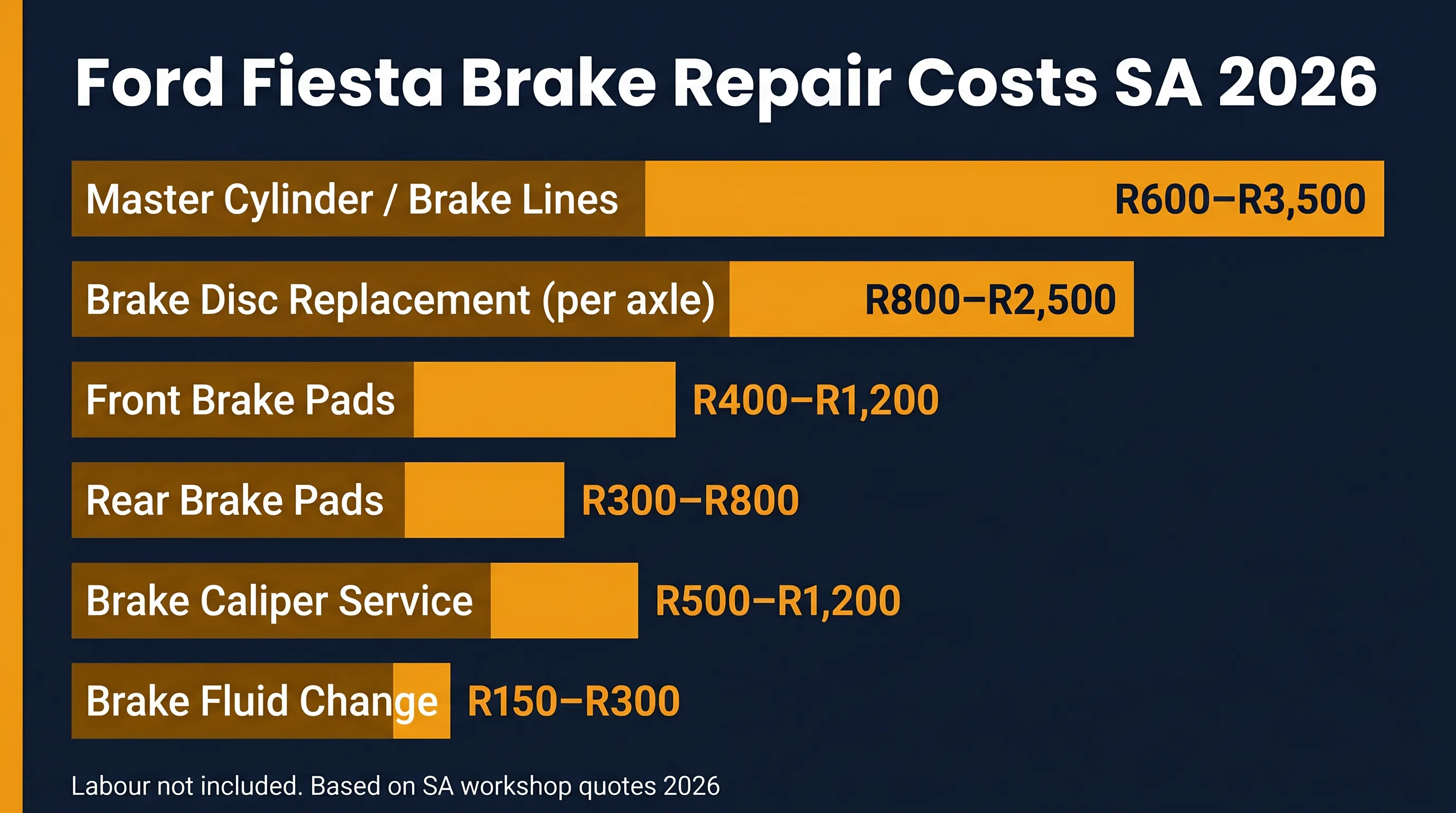
| Squeaking Brakes | Medium | R400 – R1,200 (pads) |
| Spongy Brake Pedal | High | R600 – R3,500 |
| Brake Fade | High | R800 – R2,500 |
| Grinding Noise | Critical | R1,200 – R4,500 |
| Brake Judder | Medium–High | R800 – R2,500 |
The Ford Fiesta is one of South Africa’s most popular compact cars, known for economical running and nimble city handling — but its brake system demands respect, particularly on SA city roads where stop-start traffic accelerates pad wear faster than European driving patterns suggest. Understanding the five most common Fiesta brake faults lets you catch them early and avoid the cascade from minor noise to expensive disc damage. For parts availability, browse our Ford Fiesta parts catalogue.
Ford Fiesta Brake System Specifications
| Specification | Details |
|---|---|
| Front Brakes | Ventilated disc brakes |
| Rear Brakes | Drum brakes (base) / Disc brakes (ST) |
| Brake Assist | Standard on newer models |
| ABS | Standard from 2008+ |
| Brake Fluid Type | DOT 4 |
| Service Interval | Every 2 years or 40,000 km |
1. Squeaking Brakes
Brake squealing is the Fiesta’s most commonly reported brake complaint, and in SA conditions — dusty roads, morning dew, and heavy commuter use — it shows up earlier than in milder climates.
Symptoms
- High-pitched squealing noise during braking
- Noise may occur only when braking or continuously
- Often worse in the morning or after washing the car
- May be accompanied by reduced braking effectiveness
Causes
- Normal wear indicators on brake pads making contact with the disc
- Dust and debris buildup between pads and rotors
- Glazed brake pads from excessive heat in stop-start traffic
- Poor quality aftermarket brake pads with hard friction compounds
Solution
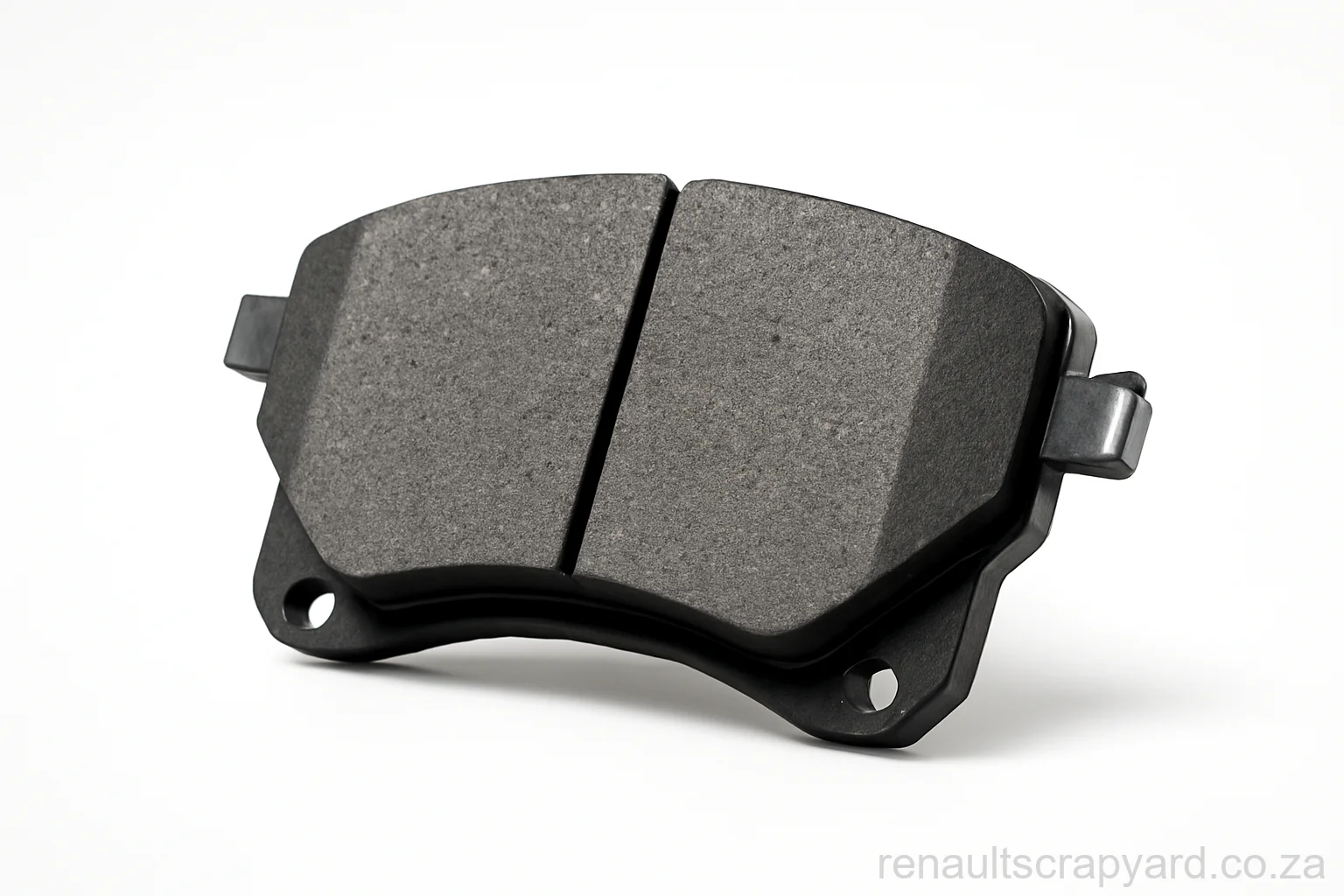
- Replace brake pads: Use quality OEM or equivalent pads
- Clean brake components: Remove dust and debris buildup
- Resurface brake discs: If glazed or lightly scored
- Check pad alignment: Ensure proper installation
SA Costs
- Front brake pads (parts): R400–R1,200
- Rear brake pads (parts): R300–R800
- Pad replacement labour (front axle): R500–R800
DIY Difficulty: Medium | Time: 2-3 hours
Money-Saving Tip
Regular brake cleaning with brake cleaner spray can prevent many squeaking issues. Perform this simple maintenance every 3 months for R50–R100 in materials.
2. Spongy Brake Pedal
A soft, spongy pedal is one of the Fiesta’s more serious brake complaints — it typically indicates either air in the hydraulic circuit or a failing master cylinder seal, both of which reduce stopping force precisely when you need it most.
Symptoms
- Brake pedal feels soft and travels too far before biting
- Pedal may sink to floor under constant pressure
- Reduced braking effectiveness, especially at first application
- May require pumping pedal to build pressure
Causes
- Air bubbles in the brake hydraulic system
- Brake fluid leaks from calipers or brake lines
- Worn brake master cylinder seals
- Contaminated or moisture-absorbed brake fluid past its service life
Solution
- Bleed brake system: Remove all air bubbles from all four corners
- Replace brake fluid: Use fresh DOT 4 fluid; old fluid absorbs moisture and lowers boiling point
- Fix leaks: Replace worn seals or damaged brake lines
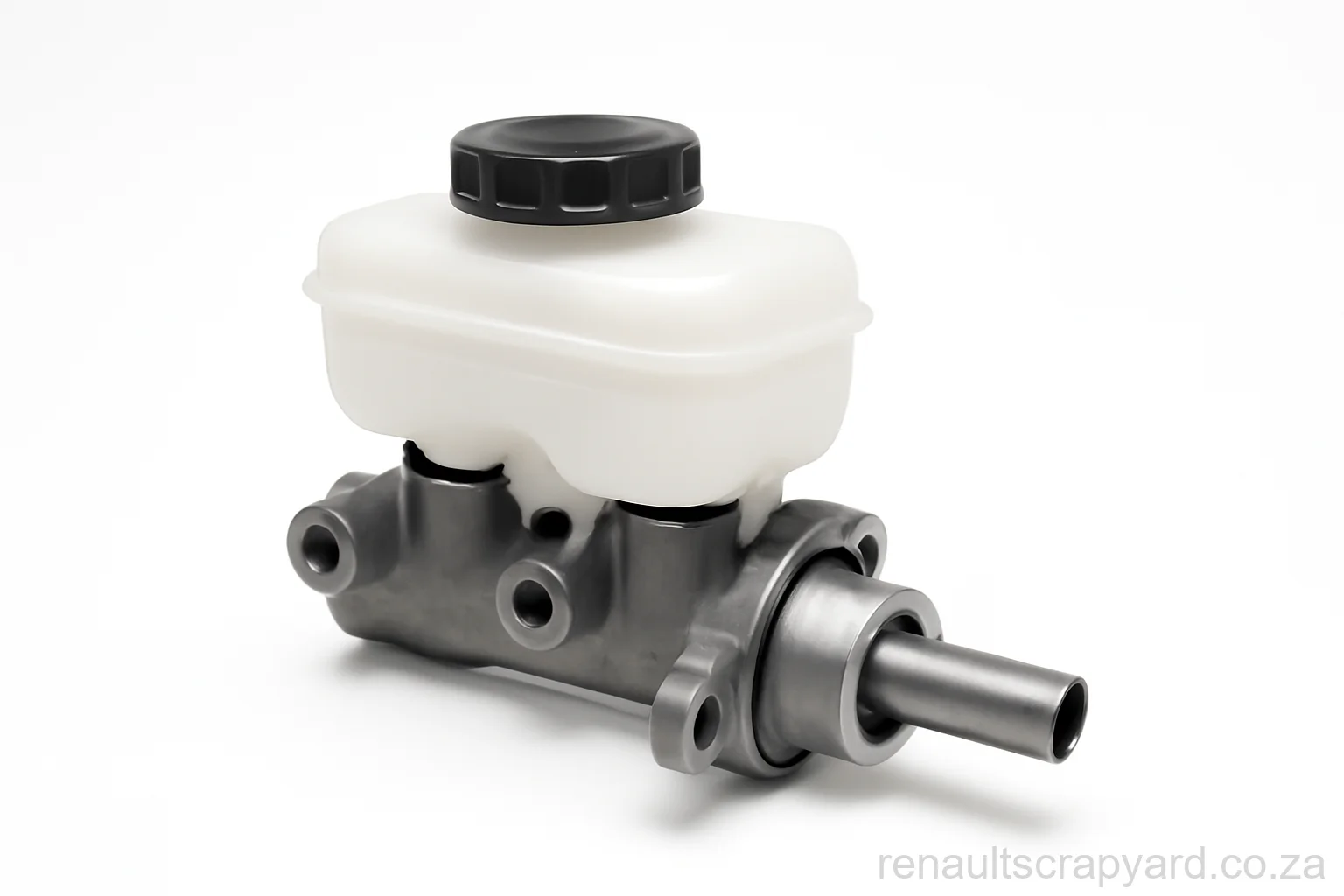
- Master cylinder service: Replace if internal seals bypass — not a repairable item on most Fiestas
SA Costs
- Brake system bleed (labour): R300–R600
- Brake fluid (1L DOT 4): R150–R300
- Master cylinder replacement: R600–R1,800 parts + R400–R600 labour
- Brake line repair (section): R400–R1,200
DIY Difficulty: Medium | Time: 1-2 hours
Safety Warning
Spongy brakes are a serious safety concern. If the pedal goes to the floor, stop driving immediately and seek professional help. Do not drive the vehicle until the hydraulic fault is diagnosed and repaired.
3. Brake Fade
Brake fade on the Fiesta is most noticeable during extended mountain passes or aggressive city driving — the pedal travel increases, the car takes longer to stop, and there is often a sharp burning smell from the wheel arches.
Symptoms
- Gradual loss of braking power during extended or repeated heavy use
- Brake pedal travel increases progressively as brakes heat up
- Burning smell from wheels during hard or sustained braking
- Most noticeable on long downhill sections or repeated emergency stops
Causes
- Overheated brake pads and discs from heavy sustained use
- Poor quality brake fluid with a low wet boiling point
- Inadequate brake cooling in stop-and-go traffic
- Worn, thin brake discs that dissipate heat slowly
Solution
- Upgrade brake pads: Use high-temperature compound pads for demanding driving
- Replace brake fluid: Fresh DOT 4 fluid with a higher wet boiling point
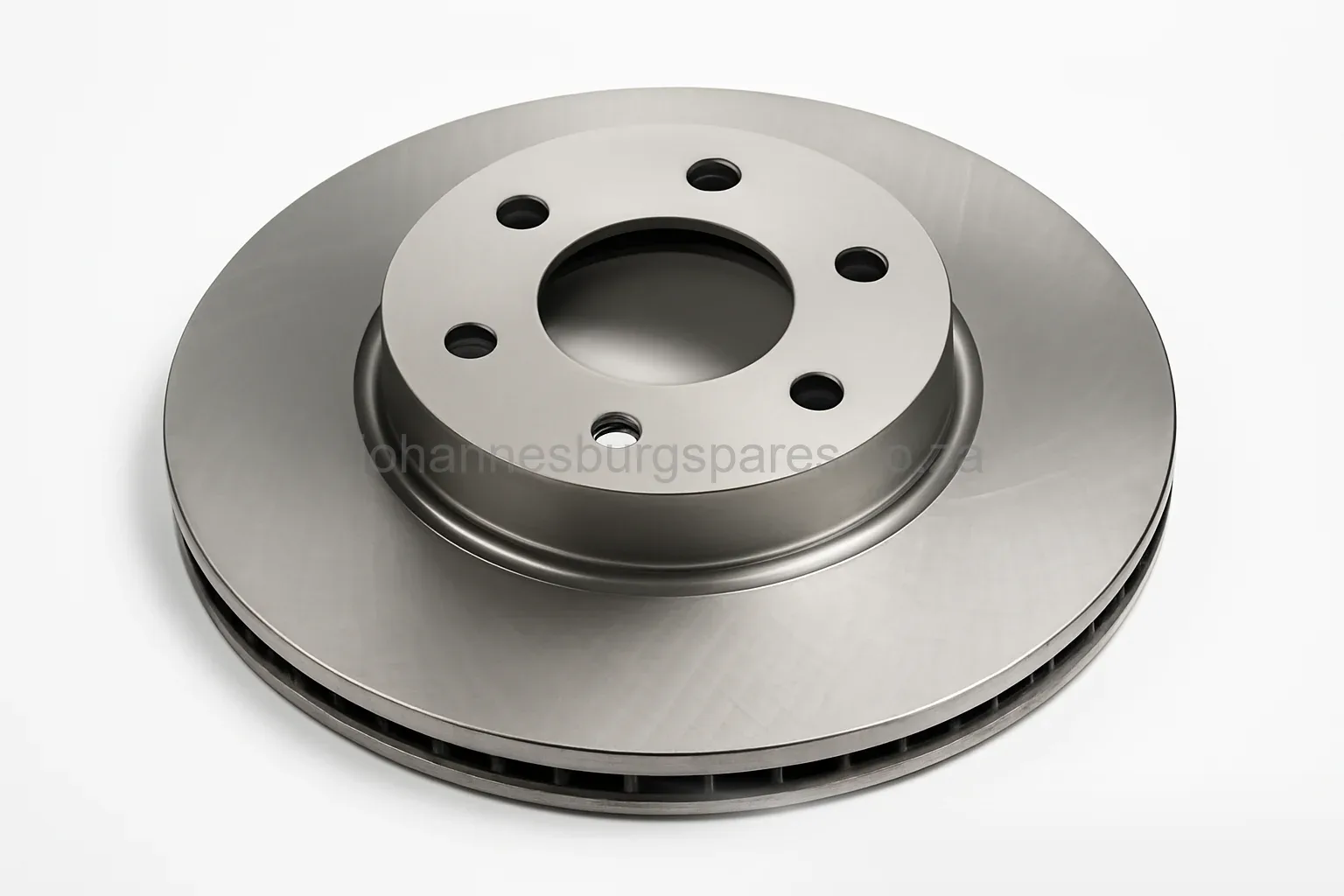
- Measure disc thickness: Replace discs that are within 1–2 mm of the minimum wear limit
- Driving technique: Allow brakes to cool between heavy use applications; do not drag brakes on long descents
SA Costs
- Front brake discs (pair): R800–R2,500
- High-performance brake pads: R800–R2,000 per axle
- Brake fluid change: R150–R300 parts + R300–R500 labour
DIY Difficulty: Medium | Time: 2-3 hours
4. Grinding Noise
A metallic grinding noise under braking is the most urgent of the five Fiesta brake faults — it means pad material has worn through to the metal backing plate, which is now scoring the brake disc directly. Every kilometre driven in this condition worsens the disc damage.
Symptoms
- Loud metal-on-metal grinding sound when braking
- Vibration through brake pedal and steering wheel
- Significantly reduced braking effectiveness
- Visible metal-to-metal contact marks on brake components
Causes
- Brake pads worn down completely to the steel backing plate
- Foreign object — stone, grit — wedged between pad and rotor
- Severely corroded brake disc surface from prolonged standing
- Seized or sticking brake caliper causing one-sided pad wear
Solution
- Immediate pad replacement: Stop driving until replaced — this is a safety emergency
- Brake disc inspection: Replace if scored or worn beyond minimum thickness
- Check for foreign debris: Remove stones or metal objects from the caliper-rotor gap
- Caliper inspection: Replace or rebuild calipers if pistons are seized or slider pins are corroded
SA Costs
- Front pads + discs together (parts): R1,200–R3,700
- Rear pads + discs (parts): R900–R2,600
- Brake caliper replacement (per corner): R600–R1,800 parts + R600–R900 labour
DIY Difficulty: Medium | Time: 2-4 hours
Urgent Repair Required
Grinding brakes indicate metal-to-metal contact. Immediate repair is essential to prevent total brake failure and expensive rotor damage. A disc that is scored beyond the minimum thickness must be replaced — machining is not an option once scoring exceeds the safe limit.
5. Brake Judder
Brake judder — vibration through the pedal and steering wheel when braking from highway speeds — is almost always a disc problem on the Fiesta: either warping from thermal stress or uneven pad deposits baked onto the rotor surface.
Symptoms
- Vibration through brake pedal during braking from speed
- Steering wheel shake when braking at highway speeds
- Pulsing sensation through the entire vehicle body
- May be accompanied by noise or reduced overall braking effectiveness
Causes
- Warped brake discs from overheating, particularly after heavy mountain use
- Uneven brake pad deposits on the rotor surface from improper bedding-in
- Loose wheel bearings affecting disc runout measurement
- Poor quality or incorrectly torqued disc installation
Solution
- Disc resurfacing: Machine discs if within thickness limits and runout is within spec
- Disc replacement: If warped or scored beyond service limits — replacement is the better long-term option
- Wheel bearing check: Replace if worn or loose, as bearing play amplifies disc runout
- Proper bedding procedure: Follow the correct 200–300 km break-in protocol for new pads
SA Costs
- Front discs (pair): R800–R2,500
- Rear discs (pair): R600–R1,800
- Disc resurfacing (per disc): R200–R400 at machine shop
- Wheel bearing (per corner): R300–R800 parts
DIY Difficulty: Hard | Time: 3-4 hours
Parts Cards — Most Frequently Replaced Fiesta Brake Components

Fiesta Brake Pads (Front & Rear)
The highest-turnover brake part on any Fiesta. We stock front and rear pads for the Mk6, Mk7, and Mk8 Fiesta — OEM-spec friction material for quiet running and consistent pedal feel in SA stop-start conditions.
Fiesta Brake Discs (Front & Rear)
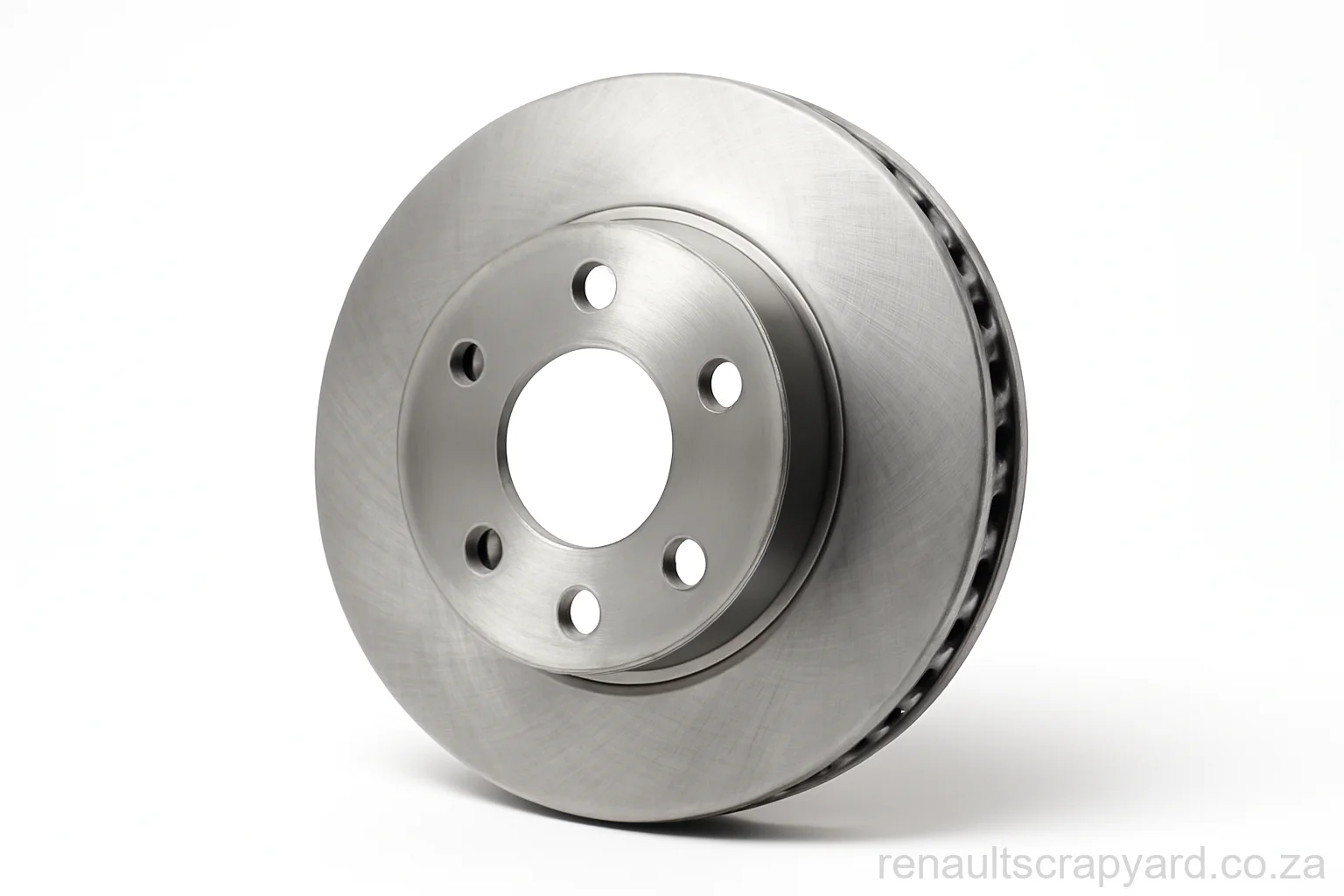
Ventilated front discs and solid rear discs for all Fiesta generations. Replacing discs and pads as a matched set eliminates judder and grinding from day one — ask us about same-week fitment.
Fiesta Brake Calipers
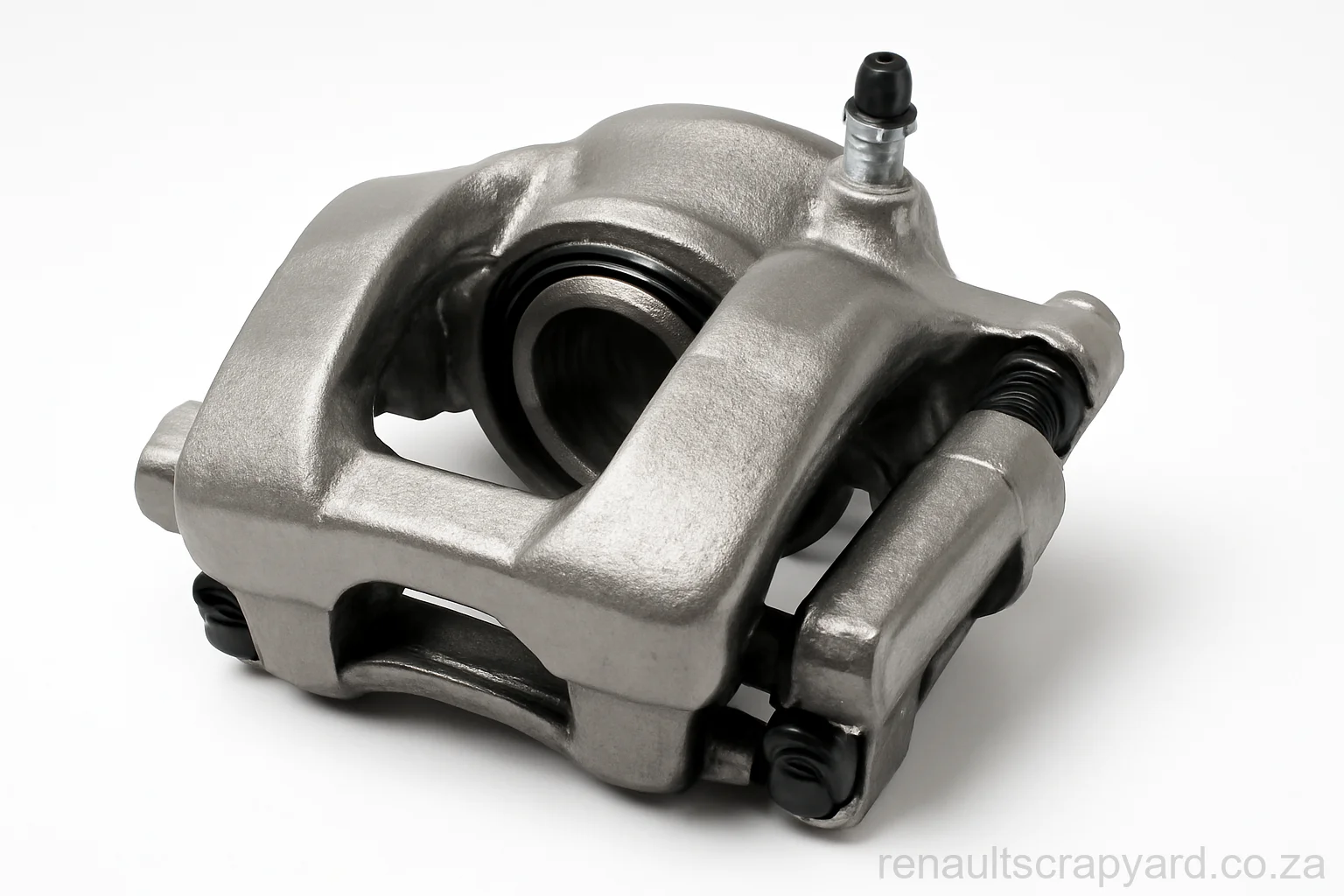
Seized or sticking Fiesta calipers are a common cause of uneven pad wear and grinding — and the ABS fault they sometimes trigger. We stock front and rear calipers for the Mk6 and Mk7 with same-week availability.
Brake Fluid & Master Cylinder
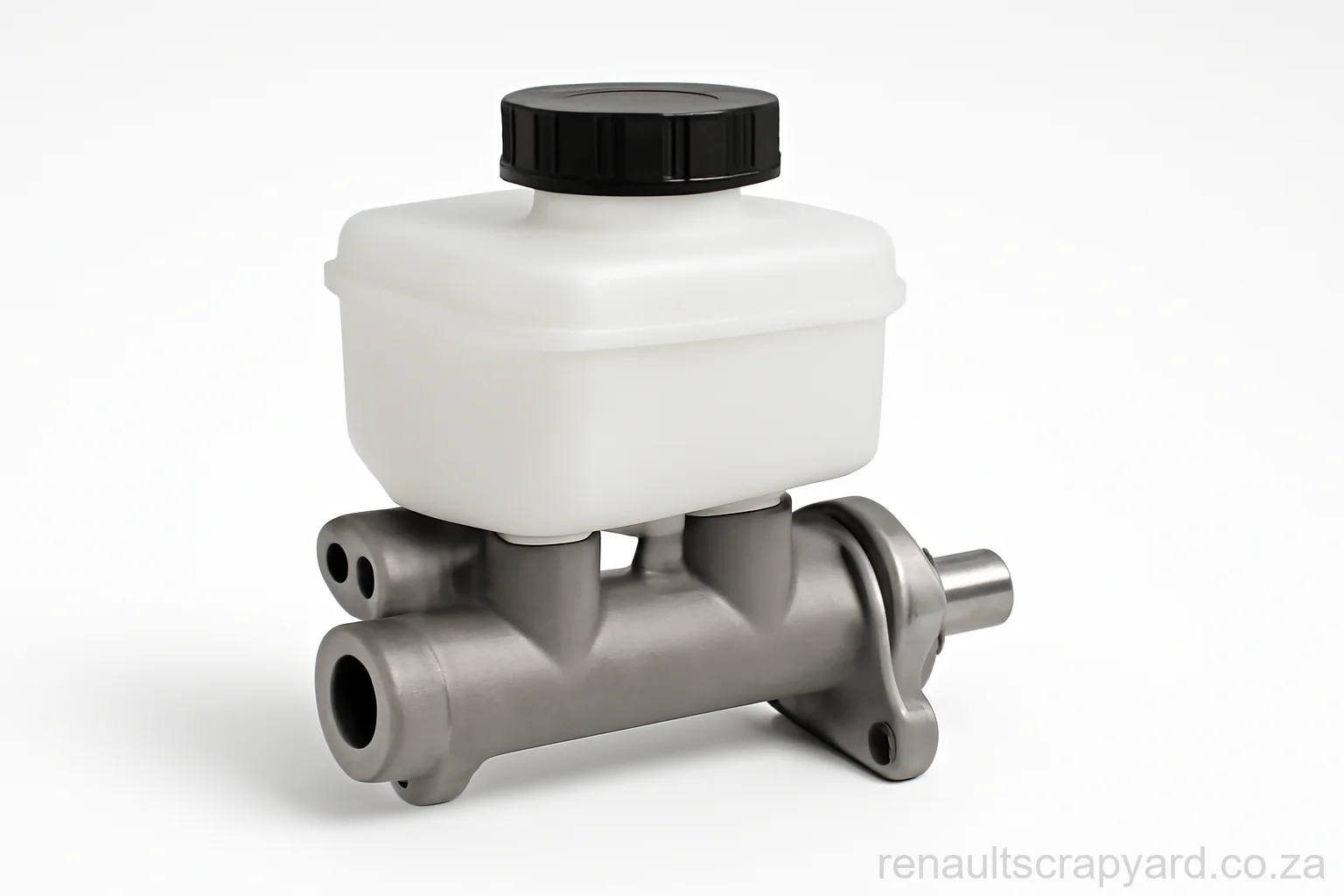
Spongy pedal and pedal fade are often traced to old moisture-absorbed brake fluid or a failing master cylinder seal. We supply DOT 4 fluid and replacement master cylinders for all Fiesta variants.
Preventative Maintenance Tips
Regular Brake Maintenance Schedule
| Service Type | Interval | Components |
|---|---|---|
| Visual Inspection | Every 10,000 km | Pads, discs, hoses |
| Brake Fluid Change | Every 2 years | Complete system flush |
| Pad Replacement | 30,000–60,000 km | Front and rear pads |
| Disc Replacement | 60,000–100,000 km | Based on measured thickness |
Critical Maintenance Items
- Regular inspections: Check brake components during tyre rotations
- Quality parts: Never compromise on brake component quality — pads and discs are a matched system
- Proper bedding: Follow break-in procedure for new pads and discs
- Avoid fade: Allow cooling time after heavy braking; do not drag brakes on long descents
Conclusion
Ford Fiesta brake problems are typically straightforward to diagnose and repair when addressed promptly. Regular maintenance and quality parts are key to reliable braking performance. While front pad and disc changes are within reach of experienced DIYers, safety-critical work such as master cylinder replacement or ABS caliper faults should be handled by a qualified technician. For a wider look at what Fiesta owners face, the Fiesta’s broader reliability record covers transmission, cooling, and fuel system issues alongside the brake concerns documented here.
Brakes are your vehicle’s most important safety system — never ignore warning signs or delay necessary repairs. When you are ready to replace worn components, browse our Ford Fiesta brake components or explore the full Fiesta parts range by system.
FAQ
How often should I replace Ford Fiesta brake pads?
Brake pad life varies based on driving conditions, but typically expect 30,000–60,000 km. City driving and heavy Gauteng or Cape Town commuter traffic reduce pad life significantly — SA owners often replace fronts at 35,000–40,000 km.
Can I drive with squeaking brakes?
Light squeaking on a cold start or after overnight moisture may be normal. Persistent loud squealing during every braking application indicates worn pads that need immediate attention to prevent rotor scoring and a much more expensive repair.
Why do my brakes feel different after replacement?
New brake pads and discs require a bedding-in period of 200–300 km of normal driving. During this time, pad material transfers evenly onto the disc surface, achieving optimal friction and consistent pedal feel.
Should I replace brake discs when changing pads?
Not always necessary — discs should be measured and inspected first. Replace if below minimum thickness (stamped on the disc hat), warped beyond 0.05 mm runout tolerance, or severely scored beyond machining limits.
How do I know if my brake fluid needs changing?
Change brake fluid every 2 years regardless of mileage — DOT 4 absorbs moisture over time, which lowers its boiling point and contributes to spongy pedal and fade. Dark, contaminated fluid or a spongy pedal feel are signs of overdue replacement.
What does it mean if my Ford Fiesta brakes are squeaking?
Persistent squeaking on a Fiesta most commonly indicates that the brake pads are wearing low and the built-in wear indicator tab is contacting the disc — this is the intended warning. Other causes include dust and debris between pad and rotor, glazed pads from stop-start heat cycling, or moisture on the disc surface after overnight standing. If the squeal appears only in the morning and disappears after one or two stops, it is likely surface rust burning off the disc — a normal characteristic of cast iron rotors.
How much does brake pad replacement cost in South Africa?
Front brake pad replacement on a Ford Fiesta typically costs R400–R1,200 for parts and R500–R800 for labour at an independent workshop, bringing the total to R900–R2,000 per axle. Rear pads run slightly less: R300–R800 parts and R400–R600 labour. Dealer pricing is 30–50% higher. Sourcing OEM-equivalent pads from a specialist parts supplier and having them fitted independently is the most cost-effective route for most SA Fiesta owners.
Which Fiesta brakes wear out first — front or rear?
Front brakes wear significantly faster on the Fiesta. Under braking, weight transfers forward, loading the front axle with 60–70% of stopping force. This means front pads typically need replacement at 30,000–45,000 km while rear pads can last 60,000–80,000 km on the same vehicle. On Fiestas with rear drum brakes (base models), the drums are generally even longer-lasting than rear disc-equipped variants.
Can a bad ABS module cause a Fiesta brake caliper to stick?
Yes — a faulty ABS module can cause brake calipers to drag by failing to release hydraulic pressure properly after a stop. The ECU TESTING channel has documented this fault specifically on the Ford Fiesta ABS pump, where the solenoid valve fails to fully open, holding residual pressure against the caliper piston. The practical symptom is a disc that is hot on one corner after a normal drive while the other three corners are cool. Inspect caliper rubber hoses for internal collapse (they can trap fluid even if the caliper piston itself is free) as a first step before condemning the ABS module.
What are the symptoms of a faulty ABS pump on a Ford Fiesta?
A failing Fiesta ABS pump typically produces an ABS warning light on the dashboard as its first sign. As the fault develops, the ABS pulses or activates in normal (non-emergency) braking at low speeds, or conversely fails to activate during a genuine emergency stop. In severe cases, the caliper sticking pattern described above develops. Diagnosis requires an OBD-II scanner capable of reading ABS module fault codes — standard generic scanners often cannot read ABS codes and a specialist Ford-compatible reader is needed.
Sources and References
- Fairway Ford of Ohio — Ford Fiesta brake squeaking causes: https://www.fairwayford.com/why-are-my-ford-fiesta-brakes-squeaking/
- ClickMechanic — Ford Fiesta brake pad replacement cost guide: https://www.clickmechanic.com/cost/ford/fiesta/brake-pad-replacement
- JustAnswer — ABS module causing sticking caliper diagnosis: https://www.justanswer.com/ford/brake-caliper-abs-module
- ECU Testing — Ford Fiesta ABS pump fault and sticking brake calipers: https://www.ecutesting.com/ford-fiesta-abs-pump-fault/
- AutoZone — How to fix a sticking brake caliper (rebuild guide): https://www.autozone.com/diy/brakes/how-to-fix-sticking-brake-caliper
Affected Ford Models
Related Parts
Need Ford Parts?
Get quality used Ford parts delivered anywhere in South Africa
Share this article
Related Articles

Ford Bantam Common Problems: 8 Faults Every SA Owner Should Know
The 8 most common Ford Bantam problems in South Africa — Rocam engine faults, immobilizer lockout, timing chain rattle, and more with real ZAR repair costs.

Ford EcoSport Common Problems: Wet-Belt Recall 23S64, PowerShift 6DCT250 & the SA Half-Shaft Recall (Owner's Guide)
Complete SA owner's guide to Ford EcoSport problems — Ford 23S64 oil-pump-belt recall, 1.0 EcoBoost wet timing belt, PowerShift 6DCT250 dry-clutch judder, the 2025 Ford SA 25S12 front-half-shaft recall (2,806 SA units), DPF clog on the 1.5 TDCi, SYNC recall and shock-absorber wear. Real repair costs in ZAR.

Ford Everest Problems: 5 Faults Every SA Owner Must Know (Owner's Guide)
The 5 most common Ford Everest problems in South Africa — 2.0 Bi-Turbo wet timing belt, 3.2 TDCi coolant intrusion and cracked block, 10R80 10-speed shudder, DPF clogging and the July 2025 V6 camshaft sprocket recall, with real ZAR repair costs.